

When your inner and outer life no longer feel aligned.
I offer calm, compassionate support for adults navigating midlife transition, helping you clarify what’s shifting and step into what’s next. I provide one-on-one coaching in Newton, MA, with virtual sessions available nationwide.
Some midlife transitions begin quietly—a sense that something isn’t right, even if nothing has changed externally.
Others begin with rupture: a job loss, divorce, illness, or death of a loved one.
Old identities loosen. Values shift. Unsettling questions arise:
Who am I beneath the roles I’ve inhabited?
Do the things I’ve cared about still matter to me?
Is this what I want the rest of my life to look like?
No matter how they begin, these transitions can feel disorienting—especially when it’s unclear what’s ending and what’s trying to emerge.
As a midlife transition coach, I accompany clients through deep internal and external change—much like a doula supports people through life’s major transitions. My role is to help you navigate uncertainty and move forward with clarity, perspective, and intention.

Testimonials
Midlife Transition as a Rite of Passage
Midlife transition—often dismissed as a “crisis” of sports cars and affairs—is one of the most powerful rites of passage humans can experience. It’s not easy, but falling upward at midlife can open a door to authenticity and freedom.
Across cultures, rites of passage are seen as having three phases, as described by anthropologist Arnold van Gennep. Below is how these stages can manifest during the midlife transition and how I support clients through each phase.
-

1. Separation — The Pull Away From Who You’ve Been
✓ Feeling unfulfilled despite external success
✓ A sense of “I don’t know who I am anymore”
✓ Craving stimulation, novelty, and aliveness
✓ Grief for parts of life that weren’t what you’d hoped
My role: To help you honor and release your past and shed identities that no longer reflect your truth.
-

2. Liminality — The In-Between Space of Transformation
✓ A breakdown of old narratives
✓ Heightened self-inquiry and emotional intensity
✓ Emerging desires that feel surprising or disruptive
✓ A pull to let go of who you “should” be
My role: To provide a grounding and compassionate space that supports growth through uncertainty.
-

3. Reintegration — The Emergence of a New State of Being
✓ Feeling more ease, clarity, and agency
✓ Less reactive and more responsive
✓ Reorientation to service over achievement
✓ Making choices that align with your values
My role: To support you in orienting your life toward new ways of being and values-aligned decisions.
Work with Me
Midlife transition coaching offers a structured, compassionate space for clients navigating career transitions, identity shifts, and other major life changes. Together, we clarify what’s ending, what’s emerging, and how to move forward.
About Julia
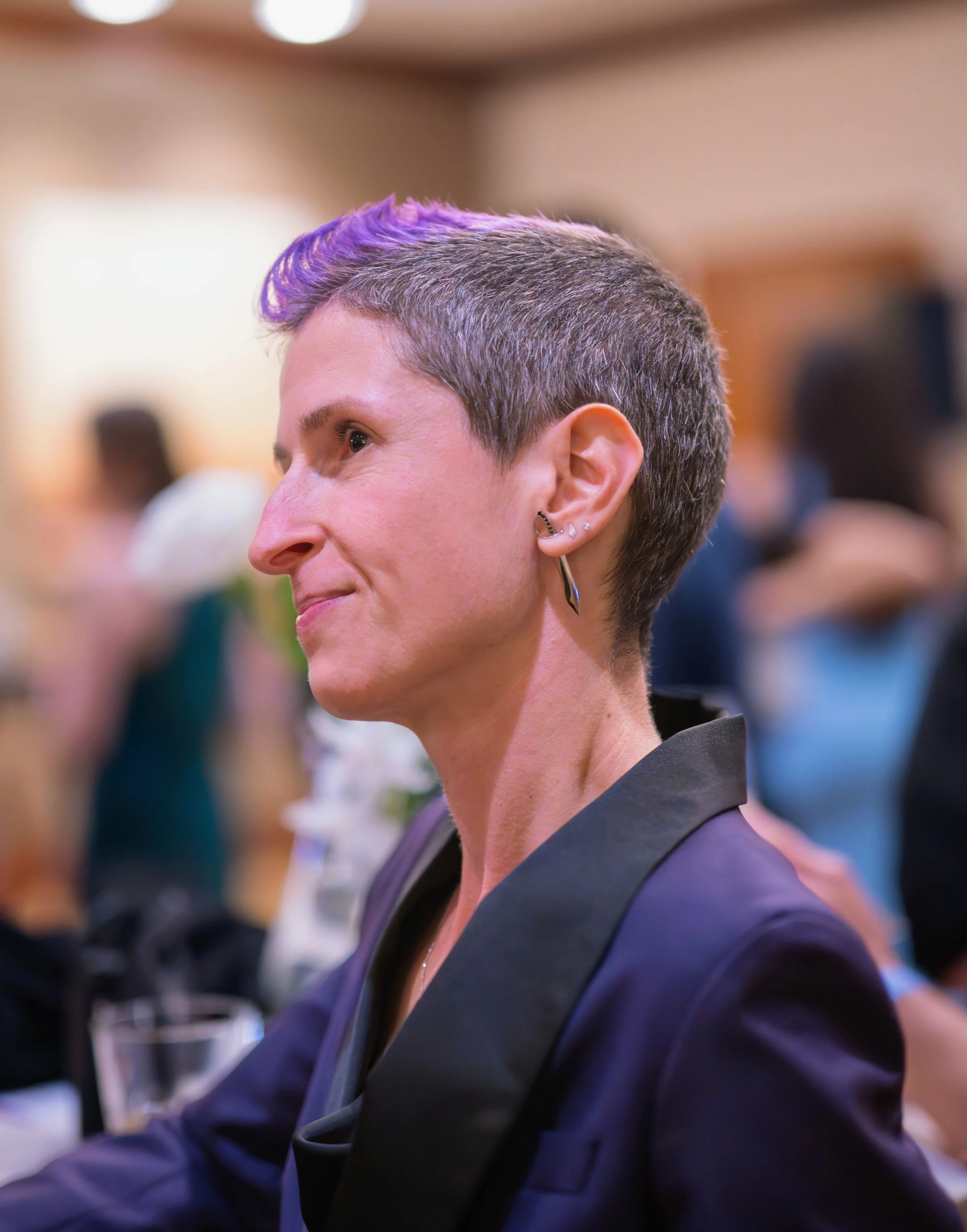
My practice supporting midlife transition was inspired by my own midlife crisis and transformation. I now feel called to offer others the kind of support that could have scaffolded my own process.
I am trained in Internal Family Systems, an evidence-based and non-pathologizing approach to help people step into a leadership role in their own lives. In addition to my one-on-one practice, I work to improve health and wellbeing at a population level. I’m an Associate Professor at Harvard Medical School, with a PhD in epidemiology and master’s in public health from the University of California, Berkeley. I have authored 135+ articles in peer-reviewed journals, such as the New England Journal of Medicine and JAMA, and have served as a mentor for over a decade.
My writing on health and wellbeing has been featured in The Atlantic, STAT, and the Harvard Health Blog, and I have provided comment for media outlets such as CNN, MSNBC, and The New York Times.
FAQ
-
Internal Family Systems sees our internal system as having parts led by a core Self. These parts are innate but can be forced into extreme roles because of challenging experiences when we’re young. All parts are valuable and trying to protect us, even those that cause difficulty in our lives. IFS practitioners help people work with their parts and step into Self leadership, reflected by the 8 Cs: confidence, calm, compassion, courage, creativity, clarity, curiosity, and connectedness.
-
Traditional coaching is often focused on improving performance in a particular area of life (e.g., career, parenting). Transformational coaching focuses less on what to do and more on how to be. By going upstream, this work can have a profound and sustained impact on all areas of life.
-
Although there can be some overlap between the approaches used in therapy and transformational coaching, therapy tends to focus on mental health issues, whereas transformational coaching focuses on personal development. My services are for personal growth only, not for therapy or medical treatment.
-
A doula—ancient Greek for woman who serves—supports people through transformative moments of life, traditionally birth and death. I believe the midlife transition, with its own form of death and rebirth, deserves this kind of care. My approach blends the nurturing qualities of a doula with the accountability of a coach.
-
The timing of the transition to the second half of life can be highly variable. It might begin at age 35, 55, 75, or beyond, and some people never experience it at all. I use “midlife” to describe a particular stage of life rather than chronological age.
-
You can expect presence, compassion, and candor, with personalized support tailored to your journey. Here’s what other people have said about their experiences working with me.

Contact
If what I’ve written here resonates for you, please contact me to schedule a complimentary 30-minute exploratory call. We’ll talk about what you’re navigating at this moment in your life and whether IFS-informed coaching might be supportive. If it turns out I’m not the right fit for you, I’ll do my best to connect you with other resources.